Why Louma's launch in Bangui matters to me
NOVEMBER 4, 2026 · 3 MIN READ · ECOSYSTEM
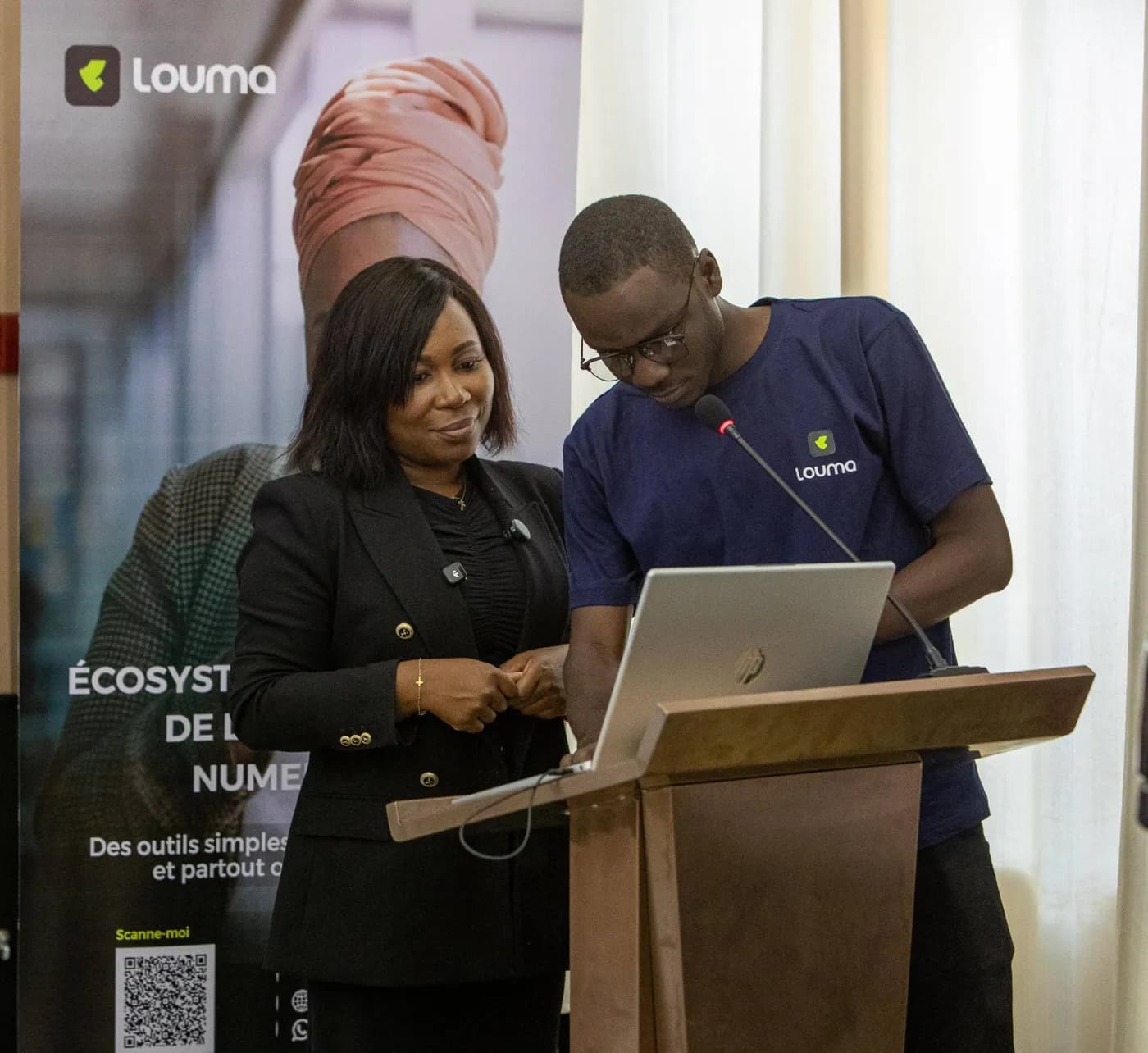
I was in the room on 28 October when Louma was presented in Bangui. I contributed to this product, so I'm not neutral and I won't pretend to be. I'm proud of it. Really proud.
I build software in this country, so I know what it costs. The connection drops, the power goes, and only about one person in eight is online. You spend as much time explaining why an app is useful as you do building it. There aren't many people around you who have done it before.
So when I see a Central African super app on a banner in Bangui, explained to Central Africans by the people building it, it does something to me. We are used to receiving. The software comes from elsewhere, the solutions come from elsewhere, and we adapt as best we can. This one started from our own daily life: finding a shop, ordering a meal, booking a driver, reaching a doctor, helping an association.
I also want to be honest about where it stands. It isn't finished. You can't pay a merchant inside the app yet. Many people won't know how to use it at first, and many others don't have the network, the data or the phone for it. A triumphant post would be easier to write, and it would be a lie.
What excites me is what happens if it works.
Think of a woman selling from a stall in Bangui. Today, her customers are the people who walk past. Put her shop on a phone and her customer can be on the other side of town, or abroad and trying to help family back home. Think of the driver or the delivery rider who gets one more job a day because a customer can finally find them. Think of the young person in a neighbourhood who becomes the one everybody asks for help, and who could one day be paid to teach it. And every time someone makes their first digital payment, it gets a little easier for the next Central African startup to exist.
It matters to me as a teacher too. When I teach young people algorithms, Python and web development, the real question behind their questions is simple: what will I do with this here? I want to be able to point at products built in this country and say: that, and now build the next one.
None of it is guaranteed. An app creates nothing just by existing. People have to use it, and this is where I'll say something that may annoy people my age.
Half of this country is under 15. We call young people "the future" so often that the words no longer mean anything. And what I see, when a local initiative appears, is that our first reflex is suspicion. Who is really behind it? How long before it dies? I have those reflexes too, and they aren't stupid. We have all seen projects disappear right after the launch photo.
But at some point, suspicion becomes a comfortable way of doing nothing. We complain that nothing is ever built here. Then, when something is, we wait to see whether it survives, and our waiting is part of what kills it.
I'm not asking anyone to applaud Louma. Try it. If it's bad, say so, and say it to the people building it. Show your mother how it works. And if you think you can do better, do it. I mean that. A competitor to Louma would be good news for all of us. What we can't afford is to watch from the side and say "I told you so" at the end.
Louma's CEO told the room that Louma is here to stay. I want that to be true, and no team can make it true alone.
So I'll ask you directly. If Louma were on your phone tomorrow, what is the first thing you would want it to do for you, and what would stop you from using it? And if you think I'm wrong about young people, tell me that too. Leave your answer in the guestbook. I read every message.